

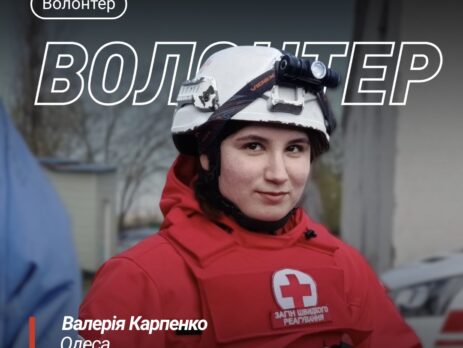
The story of a Ukrainian Red Cross emergency response team volunteer from the Odesa region
Valeriia has a degree in Chinese language teaching and once believed that this would be her future. Before the full-scale war, she studied and worked as a private tutor. Everything changed when the war forced her to leave her hometown, Mykolaiv. It was then that she first received support from the Ukrainian Red Cross — during one of the most difficult moments of her life.
“When I was forced to flee, I had almost nothing. But I still remember that support — and the feeling that you are not alone.”
Valeriia joined the Ukrainian Red Cross team in Odesa in May 2023. At first, she volunteered by distributing humanitarian aid, providing psychosocial support, and taking part in various initiatives.
“I simply brought my clothes to the clothing bank — and that’s how it all began,” she says.
Over time, she became one of the organisation’s most active volunteers, working across different areas before becoming the volunteer leader for her district and later for the entire regional branch. She admits:
“I wanted everyone to know about the Ukrainian Red Cross because I understood how important its work is.”
What motivates Valeriia most is her own experience.
“I once found myself in a hopeless situation. And I received help. That feeling of gratitude has stayed with me ever since — and it inspires me to help others.”
She remembers the hotline calls particularly well — conversations that were often difficult and emotional.
“Sometimes people simply need someone to listen to them. And you realise that, at that moment, this is what matters most to them.”
The moments she remembers most are when people return simply to say thank you.
“These are very simple things, but they stay with you for a long time.”
Over time, Valeriia realised that she wanted to do even more. Today, she works for the Odesa regional branch of the Ukrainian Red Cross and, in her free time, responds to strike sites together with the Odesa emergency response team to help affected people.
She admits that there have been moments when volunteering felt frightening.
“It is frightening when you do not know where or when another strike may happen. When it happens near you or your loved ones. But it is even more frightening to hurt someone with the wrong words. That is why I began learning more about psychological support.”
For her, psychological support is just as important as medical aid.
“To me, it is just as important as applying a tourniquet. If done properly, it can also save lives.”
Today, Valeriia speaks simply about volunteering:
“It is not only about personal growth or experience. It is about feeling that you are needed. That even a single word can support another person.”
And she adds:
“Strength does not come from having free time or personal experience of war. Strength comes from the desire to reduce human suffering when it is truly needed.”