

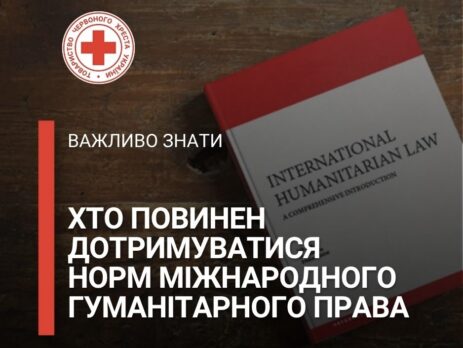
Who Must Comply with International Humanitarian Law?
International humanitarian law (IHL) applies automatically during international and non-international armed conflicts, as well as in situations of occupation, regardless of whether war has been formally declared. Its rules apply throughout the territory of the parties to the conflict, including land, airspace, and territorial waters. In international armed conflicts, they also extend to areas of naval warfare beyond the national jurisdiction of third States.
International humanitarian law is specifically designed for situations of armed conflict. It protects people who are not, or are no longer, taking part in hostilities and establishes limits on the methods and means of warfare.
The primary responsibility for ensuring compliance with IHL lies with States. They must ensure that their armed forces, State authorities, and any persons or groups acting on their instructions, or under their direction or control, comply with its rules.
At the same time, all parties to an armed conflict are bound by international humanitarian law. Violations may give rise to both the international legal responsibility of a State and the individual criminal responsibility of those who commit them.
This obligation is established under both treaty law and customary international humanitarian law. In particular, Common Article 1 of the four Geneva Conventions of 1949 requires States to respect and ensure respect for the Conventions in all circumstances.
Compliance with international humanitarian law helps limit the consequences of war and protects civilians, as well as people who are no longer taking part in hostilities. For this reason, promoting knowledge of IHL is itself an international legal obligation of States.
The Ukrainian Red Cross supports the State in fulfilling this obligation by delivering training, awareness-raising activities, and educational initiatives aimed at promoting knowledge of international humanitarian law.