

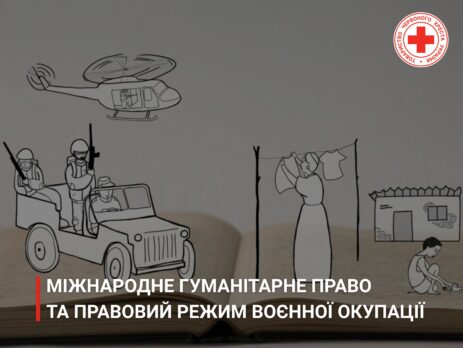
International Humanitarian Law and the Legal Regime of Occupation
Military occupation is the temporary de facto control by one state over the territory of another, without acquiring sovereignty. In such situations, the rules of international humanitarian law (IHL) apply, with the primary aim of protecting the civilian population.
IHL applies in all cases of partial or total occupation, even in the absence of armed resistance. This is explicitly stated in Common Article 2 of the 1949 Geneva Conventions.
During armed conflict, civilians are protected under the general rules of IHL. Certain vulnerable categories (including children, the wounded and the sick) are afforded special protection.
Under IHL, the occupying power is obliged to:
- maintain public order and safety, as far as possible, while respecting applicable laws
- ensure that the civilian population has access to basic necessities for survival
- treat civilians humanely and respect their dignity
- respect private property and protect cultural property
The occupying power is prohibited from:
- compelling residents of occupied territory to swear allegiance
- carrying out deportations or forced transfers
- confiscating private property or engaging in looting
- forcing civilians to serve in its armed or auxiliary forces
Important: In situations of occupation, international human rights law also applies alongside IHL. This means individuals may seek protection through international human rights mechanisms, provided that the relevant body has jurisdiction and the admissibility requirements are met.
The Ukrainian Red Cross continues to promote knowledge of international humanitarian law, raising public awareness and contributing to the protection of people in armed conflict.