

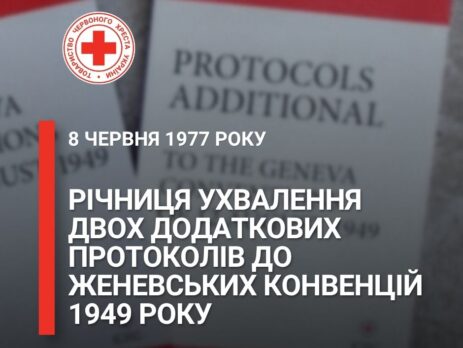
Anniversary of the adoption of the two Additional Protocols to the 1949 Geneva Conventions
On 8 June 1977, the two Additional Protocols to the Geneva Conventions of 12 August 1949 were adopted at the Diplomatic Conference in Geneva. These treaties strengthened the protection of victims of armed conflicts, including civilians, as well as the wounded and sick. They also reinforced rules on the protection of civilian objects against the effects of hostilities and established important limits on the means and methods of warfare.
To date, 175 States are party to Additional Protocol I and 170 States are party to Additional Protocol II, making them among the most widely ratified treaties in the field of international humanitarian law (IHL).
The key distinction between the two Protocols lies in their scope of application. Additional Protocol I applies to international armed conflicts — primarily conflicts between States, as well as certain situations of peoples’ struggle for self-determination, as defined in the Protocol. Additional Protocol II applies to non-international armed conflicts, meaning armed conflicts taking place within a State between its armed forces and organised armed groups, under the conditions set out in the Protocol:
- Additional Protocol I to the Geneva Conventions of 12 August 1949, relating to the protection of victims of international armed conflicts;
- Additional Protocol II to the Geneva Conventions of 12 August 1949, relating to the protection of victims of non-international armed conflicts.
In broader terms, the Additional Protocols significantly developed international humanitarian law and helped bridge two foundational branches of IHL: Geneva Law, which focuses on the protection of persons who are not, or are no longer, taking part in hostilities, and Hague Law, which governs the conduct of hostilities and regulates the means and methods of warfare.