

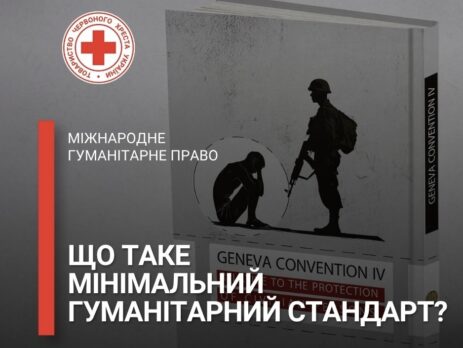
What is the “minimum standard of humane treatment” in international humanitarian law?
The principle of humanity is one of the fundamental principles of international humanitarian law (IHL). One of its clearest expressions is Common Article 3 of the four Geneva Conventions of 1949. It establishes a minimum standard of humane treatment that must be upheld even in armed conflict. Because of the fundamental protections it contains, Common Article 3 is sometimes described as a “treaty in miniature”.
Common Article 3 applies to people who are not taking an active part in hostilities, including members of the armed forces who have laid down their arms and those who are hors de combat because of sickness, wounds, detention, or any other cause. Such persons must be treated humanely in all circumstances and without adverse distinction.
To this end, Common Article 3 prohibits the following acts:
- violence to life and person, in particular murder of all kinds, mutilation, cruel treatment and torture;
- taking of hostages;
- outrages upon personal dignity, in particular humiliating and degrading treatment;
- the passing of sentences and the carrying out of executions without previous judgment pronounced by a regularly constituted court, affording all the judicial guarantees which are recognised as indispensable by civilised peoples.
It also requires that the wounded and sick be collected and cared for.
These protections apply in all circumstances, regardless of the conduct of the opposing party. The minimum standard of humane treatment must be upheld at all times.
The “minimum standard of humane treatment” sets a fundamental threshold below which the treatment of people must never fall. Even war has limits.