

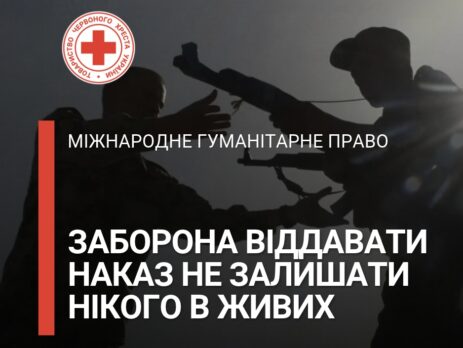
Why “Take No Survivors” Orders Are Prohibited Under International Humanitarian Law
Refusing quarter is one of the prohibited methods of warfare under international humanitarian law (IHL). This prohibition is set out, in particular, in Article 40 of Additional Protocol I to the Geneva Conventions of 1949:
“It is prohibited to order that there shall be no survivors, to threaten an adversary therewith or to conduct hostilities on this basis.”
The prohibition applies not only to a specific order. It also prohibits threatening an adversary with the denial of quarter or conducting hostilities on that basis. In other words, refusing quarter cannot be an order, a threat, or a general principle of conducting hostilities.
The prohibition is also part of customary IHL and applies in both international and non-international armed conflicts (Rule 46 of customary IHL).
This rule is particularly important for the protection of persons who are hors de combat — that is, persons who are no longer taking part in hostilities. A person who has surrendered, is wounded, sick, unconscious, or otherwise unable to defend themselves under the conditions established by IHL may not be made the object of attack.
Therefore, deliberately denying an adversary the opportunity to surrender or survive after they have ceased resisting is prohibited under IHL.
Violations of this prohibition may give rise to responsibility under international and national law. In particular, under the Rome Statute of the International Criminal Court, declaring that no quarter will be given constitutes a war crime.
The Ukrainian Red Cross continues to promote knowledge of international humanitarian law, helping to strengthen understanding of its rules and supporting compliance with them.