

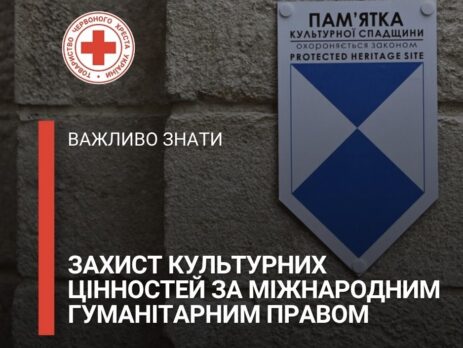
Why does international humanitarian law protect cultural property?
Cultural property is part of a people’s history, memory and identity, and some sites and objects are of outstanding importance to humanity as a whole. Architectural monuments, museums, libraries, archives, works of art and archaeological sites preserve heritage that matters not only to people today, but also to future generations.
International humanitarian law (IHL) requires parties to an armed conflict to respect cultural property. This means refraining from attacking it, avoiding any use that exposes it to destruction or damage, and preventing its theft, looting and unlawful appropriation.
How can protected cultural property be identified?
The 1954 Hague Convention provides for a distinctive emblem known as the Blue Shield: a blue-and-white shield used to identify cultural property under protection.
Different levels of protection apply to certain cultural property. Depending on its status, the emblem is displayed according to specific rules, including three times for cultural property under special protection. Cultural property under enhanced protection is identified by an emblem with a red stripe around its outer edge.
The absence of a distinctive emblem does not, in itself, mean that cultural property is no longer protected under IHL.
When can cultural property lose its protection?
Exceptions are possible only under the strict conditions set out in IHL. For example, using cultural property for military purposes may affect its protection if that use makes it a military objective. However, this does not mean that all safeguards automatically cease to apply: the conditions laid down in the relevant rules must still be met.
Protecting cultural property during armed conflict helps preserve history, cultural heritage and national identity. The Ukrainian Red Cross promotes knowledge of international humanitarian law, including the rules protecting cultural property and the importance of respecting them during war.