

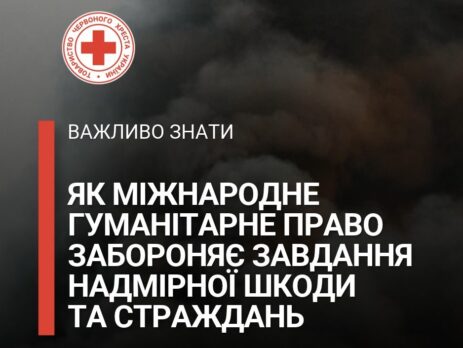
Limits on the Use of Force under International Humanitarian Law
International humanitarian law (IHL) places restrictions on the means and methods of warfare. In particular, Article 35 of Additional Protocol I to the Geneva Conventions prohibits the use of weapons, projectiles, materials and methods of warfare that are of a nature to cause superfluous injury or unnecessary suffering.
A separate restriction applies to attacks that may harm civilians and civilian objects. Under the principle of proportionality, an attack is prohibited if it may be expected to cause incidental loss of civilian life, injury to civilians or damage to civilian objects that would be excessive in relation to the concrete and direct military advantage anticipated (Article 51(5)(b) of Additional Protocol I).
Under certain conditions, a violation of this prohibition may constitute a war crime. In particular, Article 8(2)(b)(iv) of the Rome Statute provides for criminal responsibility for intentionally launching an attack in the knowledge that the expected incidental harm to civilians, civilian objects or the natural environment would be clearly excessive in relation to the concrete and direct overall military advantage anticipated.
To prevent excessive harm, parties to a conflict must assess the potential consequences of an attack in advance and take all feasible precautions. If the expected harm to civilians or civilian objects would be excessive, the attack must be cancelled. If such circumstances become apparent after a decision to launch an attack has been made, the attack must be cancelled or suspended (Article 57 of Additional Protocol I).
Thus, IHL not only restricts the choice of means and methods of warfare but also sets limits on the incidental harm permitted during attacks. Military advantage does not justify the use of prohibited weapons or attacks whose consequences for civilians and civilian objects would be excessive.
The Ukrainian Red Cross promotes knowledge of international humanitarian law and explains the importance of complying with its rules. At the same time, the organisation provides assistance to people affected by the war and helps protect human life, health and dignity.