

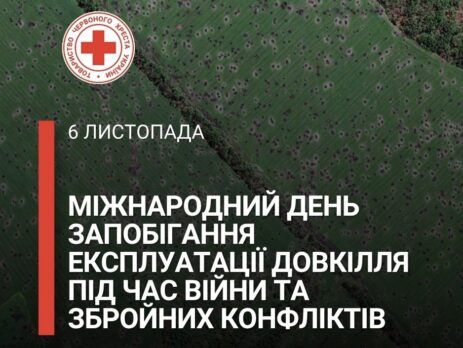
International Day for Preventing the Exploitation of the Environment in War and Armed Conflict
Established by the United Nations General Assembly in 2001, the International Day for Preventing the Exploitation of the Environment in War and Armed Conflict aims to draw the international community’s attention to the devastating impact of war on the natural environment and the need to protect it. The environmental consequences of armed conflicts often extend beyond the borders of a single country, damage ecosystems and natural resources, and affect not only present but also future generations.
During war, industrial facilities and infrastructure are destroyed, soil, water and air are polluted, large-scale fires break out, and natural areas are damaged or destroyed. These consequences can pose long-term threats to people’s health, safety and living conditions.
International humanitarian law is one of the legal frameworks for protecting the environment during armed conflicts. It establishes rules for the conduct of hostilities, restricts the choice of means and methods of warfare, and requires parties to an armed conflict to protect the natural environment.
In particular, Additional Protocol I to the 1949 Geneva Conventions prohibits the use of methods or means of warfare that are intended, or may be expected, to cause widespread, long-term and severe damage to the natural environment. The principles of distinction and proportionality must also be observed, and all feasible precautions must be taken when planning and carrying out military operations to minimise harm to civilians and damage to civilian objects.
Protecting the environment also means protecting people. The condition of natural resources affects access to clean water and food, people’s health and communities’ ability to recover after the war.
On this day, the Ukrainian Red Cross also draws attention to the need to protect the environment during war and emphasises the importance of complying with international humanitarian law. We call on everyone to remember that preserving the natural environment helps protect people’s lives, health and well-being, including that of future generations.