

What Are the Law of Geneva and the Law of The Hague in International Humanitarian Law?
How international humanitarian law protects victims of war (the Law of Geneva) and sets limits on the methods and means of warfare (the Law of The Hague)
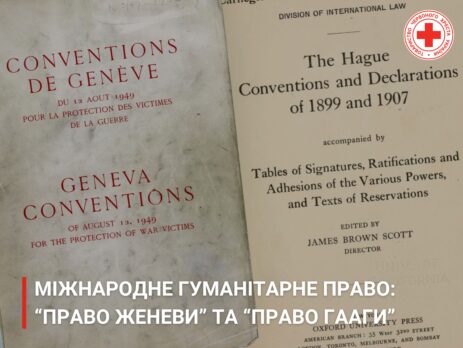
International humanitarian law (IHL) is sometimes described as comprising two “branches”: the Law of Geneva and the Law of The Hague. This distinction reflects the fact that the key international treaties in this field were adopted in these two cities. Although they developed in parallel and share the same objective — reducing human suffering during war — they approach this goal in different ways.
The Law of Geneva — protection of victims of war
This branch originated with the Geneva Convention for the Amelioration of the Condition of the Wounded in Armies in the Field (1864). Over time, the Law of Geneva evolved to focus on the protection of wounded and sick combatants, prisoners of war, and civilians. Today, the core international treaties in this area are the four Geneva Conventions of 1949, which protect victims of war, together with their Additional Protocols of 1977 and 2005.
The Law of The Hague — restrictions on the methods and means of warfare
This branch developed around The Hague Conventions and Declarations of 1899 and 1907. One of the key instruments is The Hague Convention IV on the Laws and Customs of War on Land (1907), together with the Regulations concerning the Laws and Customs of War on Land. Subsequently, additional treaties were adopted establishing prohibitions or restrictions on the use of specific types of weapons.
Today, the distinction between the Law of Geneva and the Law of The Hague is largely academic, as modern international humanitarian law integrates rules protecting victims of war with rules restricting the methods and means of warfare.
Learn more about international humanitarian law through publications of the Ukrainian Red Cross.