

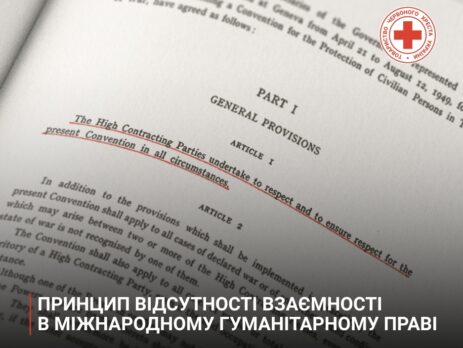
The Principle of Non-Reciprocity in International Humanitarian Law
International humanitarian law (IHL) establishes a clear rule: its norms are binding regardless of the behaviour of the other party to the conflict. Violations by the adversary do not release one from their own obligations.
This is the principle of non-reciprocity. Its significance is that humanity cannot be conditional or dependent on a “tit-for-tat” response. The protection of civilians, the wounded, the sick, and prisoners of war is an unconditional duty.
Common Article 1 of the 1949 Geneva Conventions explicitly states:
“The High Contracting Parties undertake to respect and to ensure respect for the present Convention in all circumstances.”
Rule 140 of customary international humanitarian law clarifies:
“The obligation to respect and ensure respect for international humanitarian law does not depend on reciprocity.”
In other words, no circumstances or actions by the opposing party can legally justify a violation of IHL. Thanks to the principle of non-reciprocity, IHL maintains its authority even in the most challenging conditions of armed conflict.