

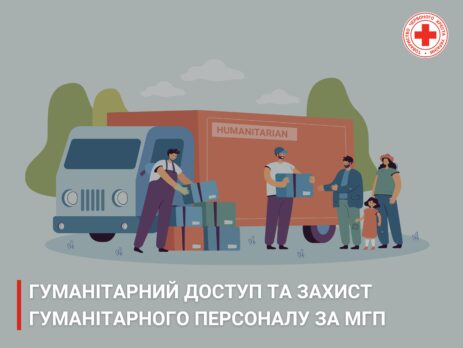
Ensuring Humanitarian Access under International Humanitarian Law
During armed conflict, civilians may lose access to food, water, medical care, and other essentials necessary for survival. For this reason, international humanitarian law (IHL) sets rules to ensure humanitarian access.
Humanitarian access means that civilians can receive assistance, and humanitarian organisations can deliver it safely and without obstacles, in accordance with the principles of humanity, neutrality, impartiality, and independence.
IHL obliges parties to a conflict to:
- Meet the humanitarian needs of the population under their control;
- Ensure the prompt and unimpeded delivery of humanitarian assistance.
In occupied territories, the occupying power is responsible for ensuring that the civilian population has access to basic necessities and must facilitate humanitarian operations.
Protection of Humanitarian Personnel
Effective humanitarian access is not possible without protecting the people who provide aid. Under IHL, humanitarian personnel and the assets used to deliver aid are entitled to respect and protection. Parties to a conflict are obliged to:
- Facilitate the work of humanitarian personnel;
- Ensure their freedom of movement;
- Refrain from attacks or other actions that obstruct humanitarian activities.
The Ukrainian Red Cross calls on all parties to respect IHL regarding humanitarian access and the protection of humanitarian personnel.