

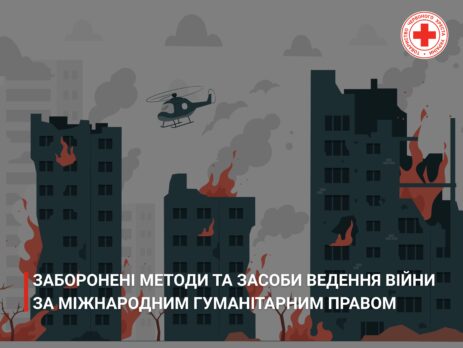
Methods and Means of Warfare Prohibited or Restricted under IHL
International humanitarian law establishes that even in times of war, the use of force is subject to legal limits. Its rules aim to protect civilians, the wounded and sick, and prisoners of war, as well as to prevent unnecessary suffering and destruction.
IHL prohibits means and methods of warfare that:
- are indiscriminate in nature;
- cause superfluous injury or unnecessary suffering;
- cause widespread, long-term and severe damage to the natural environment.
Prohibited means of warfare include, in particular:
- chemical, biological and toxic weapons;
- weapons with fragments that are undetectable by X-ray;
- expanding or deforming bullets;
- poisons and poisonous substances.
Certain types of weapons are not entirely prohibited but are subject to strict limitations on their use. For example, the use of incendiary weapons against civilians and civilian objects is prohibited.
Prohibited methods of warfare include:
- indiscriminate attacks;
- acts or threats of violence intended to spread terror among the civilian population;
- the use of starvation as a method of warfare;
- the destruction of objects indispensable to the survival of the civilian population;
- attacks against medical units and medical transport;
- the use of civilians as ‘human shields’;
- orders that no quarter be given (that is, orders to kill or refuse to take prisoners).
Acts of perfidy are also prohibited. This includes deliberately deceiving the adversary by abusing the protections granted under international humanitarian law—for example, the improper use of the emblems of the Red Cross, the Red Crescent, or the Red Crystal.
Serious violations of international humanitarian law may constitute war crimes and carry criminal liability.
Learn about international humanitarian law through Ukrainian Red Cross publications.